
Informal-Informal in New York

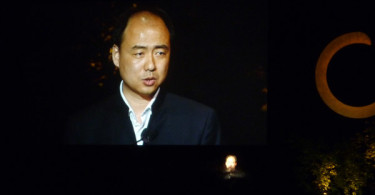
This week a small but poised Ecocity Builders delegation including Kirstin Miller, Naomi Grunditz and myself got to spend time at UN Headquarters in New York to witness the first round of ‘Informal-Informal’ negotiations on the Zero Draft of the Outcome Document of the UN Conference on Sustainable Development, or Rio+20.
Mr. Sven goes to the UN
I’m going to New York this week for the first round of ‘informal-informal‘ negotiations on the zero draft of the Rio+20 outcome document in the run-up to the United Nations Conference on Sustainable Development in Rio, June 20-22. What this means is that there will be a bunch of government and NGO stakeholders from all over the world trying to fine-tune the language of that document before the big shebang in Rio, and as a core adviser of the International Ecocity Framework & Standards (IEFS) initiative I’m invited to chime in on the parts of the draft that deal with cities. I’m not quite sure what to expect other than a lot of people in suits, but my mind is wide-open. Heh, I even bought a tie for the occasion, for the first time in my life. It’s a Jerry Garcia tie, at least, but it still wasn’t pretty watching me learn how to tie that thing.
On a more tangible note, one of the projects we’re working on with the IEFS is an ecocitizen census being developed with the help of Ushahidi and Mozilla that will enable ecocitizens around the world to crowd source the collection of environment and city data in alliance with the United Nations strategies to create sustainable city spaces. It’s basically a tool to collect data from the bottom up rather than the top down and encourage city residents all over the world to have an active stake in moving their city toward becoming ecocities. Stay tuned!
Anyway, won’t be hanging around much for a week or so as I’ll be way too busy shaking important people’s hands. Kidding, I’m just a small fish in a big pond…

This innocuous-sounding quote from the recent SF Chronicle article Transportation boosts cost of living in suburbs very poignantly describes not only the structural problems of suburban life but gets to the core of the absurdity and unsustainability of our modern fossil-fueled lives.
It’s from Scott Bernstein, President of Chicago’s Center for Neighborhood Technology, whose organization just released The Housing + Transportation Affordability Index, a study that adds transportation costs to the usual measure of affordability — housing prices.
Here’s the full quote that I think is worth being made into a refrigerator magnet for anyone thinking about moving, whether you’re buying or renting:
“You think you’re buying a cheap house 30 miles out,” he said, “but it’s 10 o’clock at night, and you need a gallon of milk. You have to get in your car, drive out of your subdivision down a two-lane road, get on the freeway and drive 10 miles. You just spent a gallon of gas to get a gallon of milk.”
boldface mine

Carless in Vancouver, Part 3: Follow the Flow
Welcome to the third and final (I promise) installment of my trip last week to Vancouver, B.C., an attempt to fit a series of ecocity workshops with all kinds of sustainable design and planning concepts into a visual real life, on the ground, context.

Here’s what happened so far:
Carless in Vancouver, Part 1: Boots on the Ground
Carless in Vancouver, Part 2: Going for the high-hanging fruit

On the technical end, I was there to discuss the International Ecocity Framework and Standards (IEFS), an initiative currently being developed by Ecocity Builders and an international committee of expert advisers that seeks to provide an innovative vision for an ecologically-restorative human civilization as well as a practical methodology for assessing and guiding progress towards the goal.

On the real life, human-being-traveling-to-another-city end, I was there to immerse myself in a new place, take in its sights, sounds, tricks and kicks, to enjoy the pretty face of one of the the greenest cities in North America…

but also let myself drift into Vancouver’s less advertised features that give its residents an environmental footprint of almost four times the sustainable level, meaning if everyone on earth lived as Vancouverites do today, we would need three to four planets to support that level of consumption…

After four days of commuting carlessly from presentations at the waterfront convention center and workshops at BCIT‘s downtown and Burnaby campuses that had taken me through dense inner city blocks, sprawling suburbs, and everything in between, I was ready for the weekend grande finale: A gathering of Core IEFS Advisers in West Vancouver, and a tour of the former brownfield industrial site turned vibrant waterfront mixed-use community South False Creek neighborhood, led by BCIT Director of Sustainable Development and IEFS Core Adviser Jennie Moore.
Carless in Vancouver, Part 2: Going for the high-hanging fruit
This is Part 2 of my trip last week to Vancouver, B.C. to meet up and exchange ideas with some of the leading thinkers in sustainable urban design and planning. (Carless in Vancouver, Part 1: Boots on the Ground described the first two days commuting between my Mount Pleasant neighborhood digs and the convention center to attend presentations about leading practices in resilient urban systems by ecocity pioneer Richard Register and sustainable developer John Knott.)
Specifically, I was there to discuss the International Ecocity Framework and Standards (IEFS), an initiative currently being developed by Ecocity Builders and an international committee of expert advisers that seeks to provide an innovative vision for an ecologically-restorative human civilization as well as a practical methodology for assessing and guiding progress towards the goal. As the UN is beginning to recognize the important role of cities and local governments in sustainable development — reflected in the Rio+20 Earth summit draft agenda — the need arises for transparent, verifiable and measurable indicators to track progress as cities and citizens move towards increased balance with living systems.
I know, that’s quite a mouthful. Measuring something as complex as entire urban systems can be quite the noggin buster, so let me just say, I feel your pain!

And let me also say this up front: When you’re looking to fundamentally change the unsustainable fossil-fueled structures upon which modern life hinges (rather than just tinkering around the edges with a little “Green” here and there), you not only run into much doubt and fierce resistance (including doubting yourself from time to time), but the harsh reality of how deep a hole we’ve dug for ourselves. For example, the City of Vancouver, often touted as one of the greenest cities in the world, has an environmental footprint of almost four times the sustainable level, meaning if everyone on earth lived as Vancouverites do today, we would need three to four planets to support that level of consumption.

As I was roaming through Vancouver on the lookout for ecocity indicators, the reality of this footprint was reflected in many places. Despite Vancouver’s many successes in sustainable urban planning…

it quickly became apparent how far this metropolis still is from being an ecologically healthy city.

I was blessed to be able to spend time with some of the local visionaries who’ve been instrumental over the last 30-40 years in getting some of the EcoDensity principles implemented in developments that are today celebrated and held up as Vancouver’s finest. A common chorus was that none of it would have happened without the passionate activism and unflinching determination by a small group of visionary citizens who saw what was possible and insisted on making it happen, despite what most city officials and the planning establishment thought of the idea.

It is thus that I continue my journey through Vancouver with the full awareness that ecocities in their full manifestation currently do not yet exist anywhere on planet Earth, but, that without a clear vision of the multidimensional changes needed and a determination to work towards those changes our best intentions will do nothing more than put a green veneer on a structurally flawed foundation.
People say we should develop models that go for the low-hanging fruit. I say, let’s go for the high-hanging fruit. Leave the low-hanging fruit for the children.
- Richard Register
Ecocity Builders founder Richard Register celebrating the Jane Jacobs-inspired South Falls Creek Village in Vancouver.
Carless in Vancouver, Part 1: Boots on the Ground
A few of days ago I arrived in Vancouver, B.C. for a week of urban planning and playing. On the official schedule are presentations about leading practices in resilient urban systems, a workshop to assess the City of Vancouver’s rating in the International Ecocity Framework and Standards (IEFS) initiative, a brainstorming session to redesign the campus of the BCIT’s School of Construction and the Environment into an ecocity fractal, and a weekend retreat of the IEFS Core Advisory Committee discussing the IEFS on the road to Rio.
That’s quite a brainful of lofty concepts…

so let’s bring this down home…

As the venerable Danish architect Jan Gehl, author of Cities for People, points out:
A good city is like a good party – people stay much longer than really necessary because they are enjoying themselves.
So let’s take a ride into Vancouver and see what there is to discover…